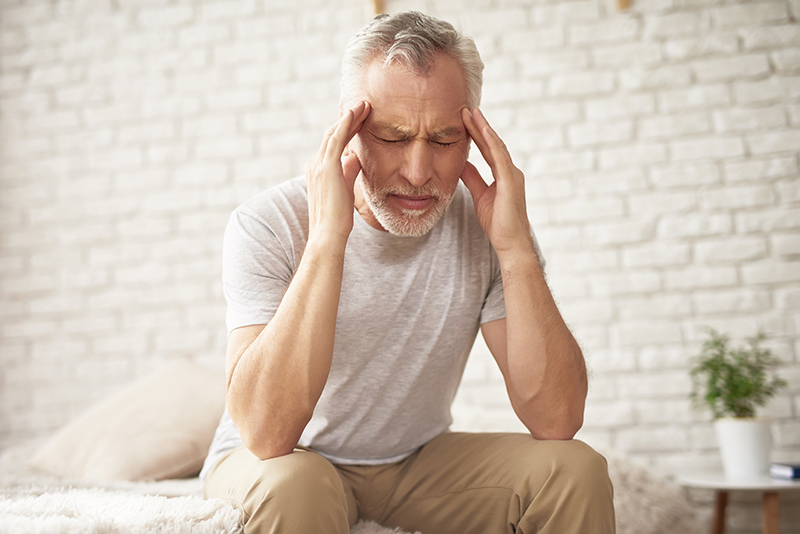
Headaches are one of the most common health complaints, with more than 10 million people in the UK getting them on a regular basis. Establishing their exact cause can be difficult and therefore means they are not always easy to treat. However, the use of Osteopathy is one of the most effective ways that we can not only treat the symptoms of a headache but also look to solve the underlying causes.
Different Types of Headaches
In total, there are over 200 different types of headaches. The following three are the most common, accounting for over 90% of what people will experience on a day-to-day basis.
Migraines
Although there are many causes of a migraine, they are most commonly triggered by issues in the upper neck. They often affect just one side of your head and can cause issues with sight or sound sensitivity. In more extreme cases, they may cause abdominal pain, nausea, and vomiting.
Tension-type headache
A tension-type headache is the most common type and affects 60-80% of the population. These are headaches associated with mental stress and postural tension, lasting from hours to days. You can identify them as tightening or pressure on both sides of your head.
They are often responsive to physical therapy, relaxation and anti-inflammatories or muscle relaxants.
Cervicogenic headaches
Cervicogenic headaches occur when pain is referred from a specific source in the neck, up into the head. Symptoms often occur on one side of the neck or head, and will often cause pain around the eyes. A cervicogenic headache is a secondary headache, caused by a pre-existing physical or neurological condition.
Some of the other less common headaches include:
Vascular and cluster
Cranial neuralgia
Eye strain, sinus problems, allergy-related
Rebound
Hypertension
Post-traumatic
Exertion
Caffeine
I went to see Anna with a severe lower back pain. She identified my problem and in a few sessions helped me to improve it. She really cares about what… read more you are going through and gives you tips to get better and avoid injury in the future. Very professional and I couldn’t recommend her more highly!
Paola Lopez
Can’t rate this place highly enough. Anna is totally amazing and has really helped me over the past when I’ve been in pain! There are other services available and overall… read more this is an great find locally.
Jo Ryder
Despite a busy practice, Anna rescued me when I was in agony and unable to move, let alone get out of bed. She quickly got me up on my feet… read more and gave me exercises to keep me mobile until the next visit. I cannot fault her. She’s not just a fantastic practitioner but a lovely person as well. She always puts others before herself. In fact she’s so highly respected that she doesn’t need to scrape around for work and genuinely only treats you when you need it. She is a most professional person and comes very highly recommend from me.
Valerie Richardson
Can Osteopathy Help with Headaches?
With so many headaches originating from tension, muscle stiffness or joint strain in the neck and upper thoracic region, osteopathy can work wonders in relieving your headache symptoms and preventing them from coming back again. Other symptoms include sinus congestion, whiplash, stress, poor posture, jaw imbalance, teeth grinding, hormone balances, blood pressure issues and allergies.
Osteopathy uses palpation, manipulation, stretching, and massage to increase the mobility of joints and help relieve muscle tension. It is therefore no surprise that research has found osteopathy is effective in treating many types of headaches, especially those with a biomechanical cause.
Let’s look in more detail at the three osteopathic treatments used to help treat headaches.
1. Soft tissue massage
A gentle massage will help to relax the joints and muscles of the neck, back and thorax. This will relieve the build-up of tension that could be causing your headaches.
2. Joint articulation
With the use of gentle articulation techniques, your osteopath will encourage joint release and movement and relieve pain. For cervicogenic headaches, the focus areas will include the mid-spine and the neck.
3. Rehabilitation exercises and advice
Following your treatments, your osteopath will give you the exercises and tools you need in your daily life to help reduce headaches moving forward. This could be guidance on posture or beneficial rehabilitation exercises.
Book Your Appointment Today
Key Osteopaths in Surrey are located in West Byfleet. With over 10 years of experience and qualifications from the British School of Osteopathy, our friendly team of osteopaths provide a range of treatments, including headaches, facial, cranial, dizziness, and posture.
If you would like to book an appointment, contact us today for more information. Our clients differ considerably in age, lifestyle and fitness level – everyone is welcome and we are confident in our ability to help you.


 Paola Lopez
 Jo Ryder
 Valerie Richardson